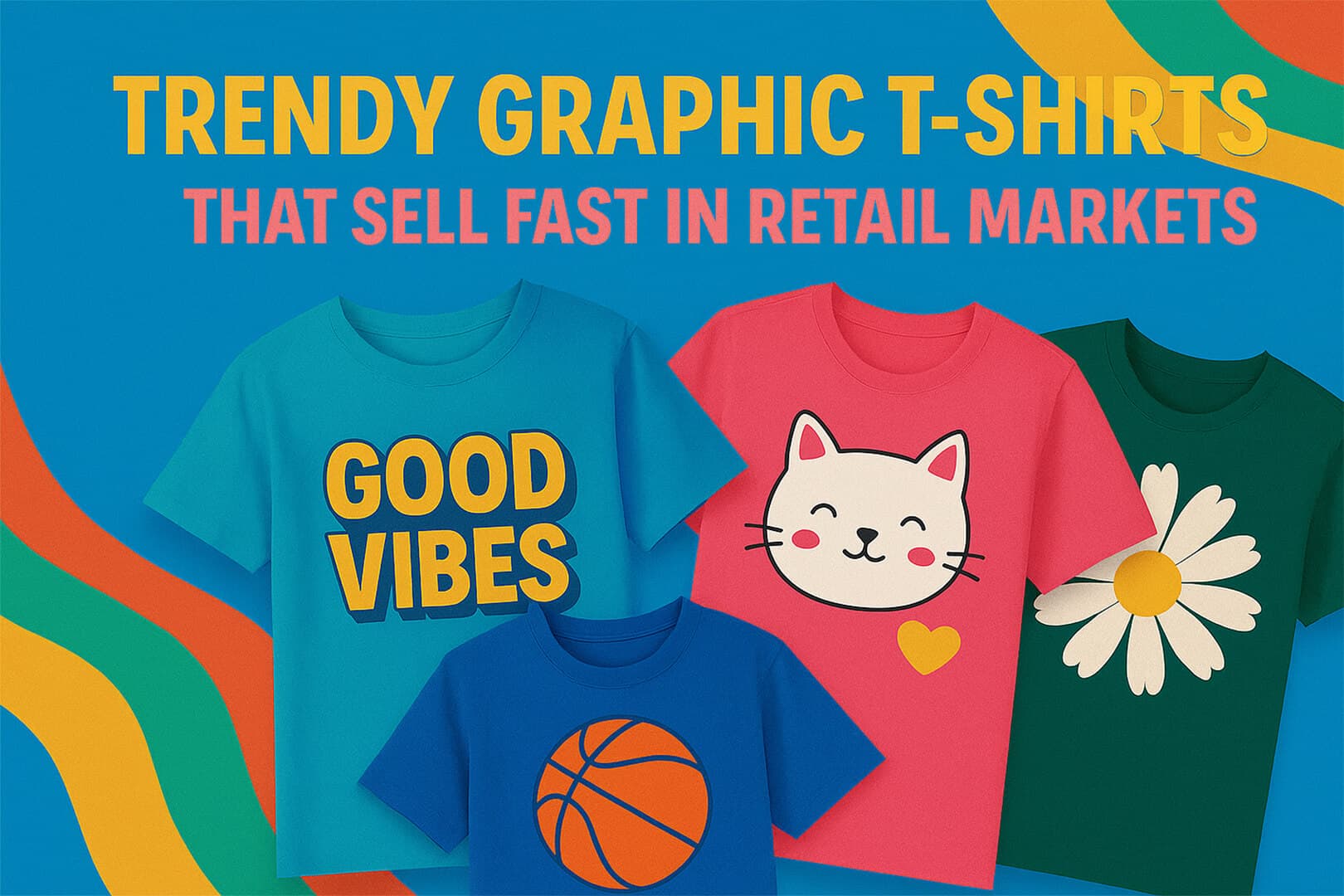
Custom apparel printing in 2026 is shifting toward DTF and sublimation methods, water-based inks, and on-demand small-batch runs that reduce waste and lower minimum order quantities. These five custom apparel printing trends affect how wholesale buyers should brief a design, choose a printing partner, and specify a fabric for children's wear production, and LAMBLILY tracks all five from our Vandalur, Chennai facility to keep every printed order compliant and durable.

Understanding these custom apparel printing trends helps wholesale buyers brief designs correctly, budget realistically, and avoid the printing method mismatches that cause cracked, peeled, or faded prints after only a few home washes. In our experience working with first-time buyers, the single biggest cost saver is choosing the right printing method before artwork is finalized, rather than after a sample has already failed.
What Is Driving Custom Apparel Printing Trends in 2026?
Three forces are reshaping custom apparel printing this year: smaller order sizes from private label brands testing new designs, tighter compliance requirements from retailers in the UK, EU, and North America, and buyer demand for prints that survive a full school year of weekly washing. Each of the five trends below responds directly to one or more of these pressures.
Why Buyers Should Track Custom Apparel Printing Trends Now
Buyers who ignore custom apparel printing trends often discover the mismatch only after a bulk order ships, when a print that looked fine on a digital mockup cracks within a dozen washes. Our team recommends reviewing this guide before finalizing artwork for any new season, since a printing method chosen at the design stage is far cheaper to change than one discovered wrong after production.
Trend 1: DTF Printing Becomes Default for Small Orders
Direct-to-film, or DTF, printing has become the dominant custom apparel printing method for orders that are too small for screen printing to be cost-effective but still need full-color detail. The process prints a design onto a special film, applies a hot-melt adhesive powder, then heat-presses the transfer onto the garment.
How DTF Direct-to-Film Printing Works
DTF printing does not require screens, so setup cost and lead time stay low even for a single-colorway order. The film transfer holds fine detail, gradients, and small text far better than screen printing at low volumes, which makes it well suited to sample runs, private label testing, and multi-design programmes where each design only needs 100 to 300 pieces. LAMBLILY runs DTF printing on GOTS-certified organic cotton and OEKO-TEX-compliant fabric as standard for these smaller custom apparel printing orders.
Where DTF Fits in a Custom Apparel Printing Trends Programme
DTF suits cotton and cotton-blend kids wear specifically because tightly woven or knit cotton holds the adhesive layer evenly across the print area. Buyers moving from screen printing to DTF for small runs typically see faster turnaround, since there is no screen-burning step, and better color accuracy on designs with more than four colors, since DTF does not carry the per-color setup cost that screen printing does.
Trend 2: Sublimation Printing Expands for All-Over Kids Wear Designs
Sublimation printing has grown fastest for all-over and edge-to-edge custom apparel printing designs on polyester and poly-blend kids wear, since the dye becomes part of the fiber itself rather than sitting on top of it. This produces a print that cannot crack, peel, or feel stiff to the touch, which matters for children's clothing worn during active play.
Sublimation vs DTF: Choosing the Right Method
Fabric composition is the deciding factor between these two custom apparel printing methods, not design complexity. Sublimation requires polyester or a high-polyester blend to bond correctly, while DTF works on cotton, cotton blends, and polyester alike. The table below summarizes how the four main methods compare for a typical kids wear order.

| Printing Method | Best Fabric | Best Order Size | Print Feel |
|---|---|---|---|
| DTF (direct-to-film) | Cotton, cotton blends | Small to mid (100-500 pcs) | Slight surface layer |
| Sublimation | Polyester, poly blends | All-over, any size | Part of the fiber |
| Screen printing | Cotton, cotton blends | Large (500+ pcs per design) | Surface layer, thicker ink |
| Digital (DTG) | Cotton, cotton blends | Small, multi-design runs | Soft, absorbed into fiber |
Trend 3: Eco-Friendly and Water-Based Inks Replace Plastisol
Retailer compliance pressure is pushing custom apparel printing away from traditional plastisol ink toward water-based and pigment ink systems that meet OEKO-TEX Standard 100 restricted substance limits without the PVC and phthalate content that plastisol can carry. This shift matters most for children's wear, where restricted substance limits are stricter than for adult clothing.
Why Eco-Friendly Inks Matter for Certified Kids Wear
Water-based inks soak into the fabric rather than sitting on the surface, producing a softer hand-feel that buyers increasingly request for children's clothing. They also complete the compliance picture for GOTS-certified organic cotton garments, since a certified organic fabric printed with a restricted-substance ink undermines the certification's purpose. LAMBLILY prints on GOTS-certified organic cotton and OEKO-TEX-compliant fabric using DTF and sublimation methods that avoid plastisol entirely, keeping every custom apparel printing order aligned with the fabric's own certification.
- Water-based inks: soft hand-feel, breathable, suit GOTS-certified organic cotton programmes.
- Pigment inks: durable, wide color range, common in DTF transfer film.
- Plastisol inks: thick, opaque, being phased out for children's wear due to PVC and phthalate concerns.
- Discharge inks: remove the garment's own dye before printing, producing a very soft print on dark fabric.
Trend 4: On-Demand and Small-Batch Digital Printing Lowers MOQ
On-demand custom apparel printing is letting private label brands test multiple designs per season without committing to the large minimums that screen printing requires. A brand can now order 100 pieces across four different designs instead of 400 pieces of a single design, spreading risk across a wider range of concepts.
What On-Demand Printing Means for Wholesale Buyers
For buyers building a new kids wear collection, this custom apparel printing trend means smaller upfront capital risk and faster market feedback. A design that underperforms can be dropped after 100 pieces rather than after 500, and a design that sells well can be reordered quickly since the printing method does not depend on a screen that must be recreated or stored between runs. LAMBLILY supports this trend with a 100 pieces per colour MOQ across DTF, sublimation, and screen printing methods.
Trend 5: Placement, Personalization, and Specialty Finishes
Print placement and specialty finishes have become a custom apparel printing trend in their own right, moving beyond a simple center-chest logo toward considered placement across a full kids wear size range, plus embroidery and puff-print accents layered alongside a base print.
Matching Placement to Kids Wear Size Ranges
Placement decisions need to account for how proportions shift across a size range spanning ages 0 to 16, since a design centered well on a size 6 can look oversized or off-center on a size 2. Our team recommends the following placement approach for a typical custom apparel printing programme:

- Center chest placement for logos and simple graphics across most age groups.
- Full-front placement for statement designs, with extra growth room built into younger sizes.
- Sleeve or pocket placement for smaller branding that should not dominate the garment.
- All-over sublimation placement, planned around seams so the pattern lines up correctly.
- Back-of-garment placement for team or event-branded kids clothing.
- Embroidery accents layered alongside a DTF or screen print for a premium, textured finish.
How to Evaluate a Custom Apparel Printing Trends Partner
Not every printing partner has kept pace with these custom apparel printing trends, so buyers benefit from a short evaluation checklist before committing to a new design or a new supplier.
Questions to Ask Before Committing to a Print Run
- Which printing method do you recommend for this specific fabric and design, and why.
- Can you provide a physical sample before bulk production, not just a digital mockup.
- What wash-test data do you have for this exact fabric and ink combination.
- Do your inks meet OEKO-TEX Standard 100 restricted substance limits for children's wear.
- What is your minimum order quantity, and does it change across DTF, sublimation, and screen printing.
- How do you handle color matching consistency across separate production batches.
A printing partner who answers these questions with samples and test data, rather than reassurances alone, is the safer choice for a design a buyer has invested real development time into.
Custom Apparel Printing Trends Compliance and Export Considerations
Printing technology moves at the same pace worldwide, but documentation expectations for custom apparel printing vary by destination market, and buyers exporting kids wear should plan for each region separately.
UK and EU Documentation Expectations
UK and EU retailers increasingly request OEKO-TEX Standard 100 certification covering both the base fabric and the ink system used, reflecting broader EU REACH restrictions on PVC and phthalate content. LAMBLILY maintains OEKO-TEX Standard 100 compliant fabric and ink systems as standard, which covers this documentation requirement without a separate testing cycle for most buyers.
UAE and Gulf Market Considerations
UAE buyers generally prioritize vibrant, high-contrast prints that photograph well for online listings and read clearly from a distance in retail merchandising. Sublimation's ability to produce bright, all-over designs without cracking makes it a strong fit for this market's aesthetic preferences, particularly for the all-over and full-front placements popular in Gulf kids wear retail.
North American Retailer Requirements
US and Canadian retailers vary by individual company policy, with larger retailers often specifying their own restricted substance list for both fabric and print inks. LAMBLILY reviews each new North American buyer's compliance requirements individually and confirms which custom apparel printing testing package satisfies their specific programme before production begins.
Building a Custom Apparel Printing Compliance File
We recommend buyers maintain a simple compliance file per season, holding the OEKO-TEX Standard 100 certificate, ink safety documentation, and wash-test results for every printed design together. This file becomes valuable evidence if a retailer compliance audit or customer complaint ever raises a question about a specific production run, and assembling it after a shipment has already reached shelves is considerably harder than building it as a routine part of every order.
Buyers building a broader fabric and printing programme should also review our guide on choosing the right fabric for export t-shirts, which covers how fabric selection interacts with printing method durability.
Frequently Asked Questions
The five biggest custom apparel printing trends for 2026 are DTF printing for small and mid-size orders, sublimation for all-over polyester designs, water-based and eco-friendly inks replacing plastisol, on-demand small-batch digital printing that lowers MOQ, and considered placement plus specialty finishes like embroidery accents. LAMBLILY tracks all five from Vandalur, Chennai. MOQ 100 pcs. Contact wa.me/+919600656964.
Key Takeaways
This summary captures the core of the five custom apparel printing trends covered above.
- DTF printing now dominates small and mid-size orders that screen printing cannot serve cost-effectively.
- Sublimation continues to expand for all-over designs on polyester and poly-blend kids wear.
- Water-based and eco-friendly inks are replacing plastisol to meet OEKO-TEX Standard 100 limits.
- On-demand, small-batch digital printing is lowering MOQ and letting brands test more designs per season.
- Placement and specialty finishes, including embroidery accents, matter as much as the print method itself.
- LAMBLILY tracks all five trends from Vandalur, Chennai, with a 100 pieces per colour MOQ across every method.
How LAMBLILY Applies These Custom Apparel Printing Trends
LAMBLILY PRIVATE LIMITED was founded in 2019 by Juliet Preena, a Montessori educator who leads design, and Leo Daniel Raja, who brings over 13 years of supply chain and manufacturing experience. That combination shapes how our team applies custom apparel printing trends to real production, rather than treating them as marketing language.
Every printed sample goes through a wash test before bulk production begins, confirming the design still holds color and detail after repeated washing, which matters most for children's clothing worn and washed frequently through a school year. We recommend buyers request this same wash-test data from any printing partner before committing to a large order.
This trend guide connects directly to our related references on fabric for export t-shirts and the art of custom printing design, which cover design fundamentals alongside these production-level trends. Buyers exploring sizing alongside placement decisions should also review our guide on choosing the right size for kids.
Conclusion
Custom apparel printing in 2026 rewards buyers who match method to fabric, budget for eco-friendly ink compliance, and plan placement across a full kids wear size range rather than a single sample size. DTF and sublimation now cover most order sizes and design types, water-based inks are closing the compliance gap that plastisol left open, and on-demand small-batch runs are lowering the financial risk of testing new designs each season.
LAMBLILY partners with wholesale buyers at every stage of a custom apparel printing programme, from a first DTF sample to a full sublimation production run. Explore our shop to see current printed styles, review our manufacturing capabilities, or contact our team with a specific design and fabric combination in mind.
Sources and Standards Referenced
This guide references OEKO-TEX Standard 100 restricted substance testing, EU REACH restrictions on PVC and phthalate content, and general printing terminology used across the export garment industry. For further reading, see Wikipedia's overview of textile printing, OEKO-TEX Standard 100 directly, the Global Organic Textile Standard for organic fibre and processing certification, and Better Cotton's video library on cotton sourcing standards. Buyers can also review LAMBLILY's manufacturing capabilities, browse the shop, or contact our team with printing specification questions.
Source Quality Custom Apparel Printing From LAMBLILY - Chennai, India
LAMBLILY prints on GOTS-certified organic cotton and OEKO-TEX-compliant children's wear from Vandalur, Chennai, Tamil Nadu - shipping FOB to UAE, UK, USA, Canada, Australia worldwide. MOQ 100 pcs/colour.
📱 Message Us on WhatsApp 📧 Contact Us 🏭 16 Vallalar Street, Saraswathy Nagar, Vandalur, Chennai, Tamil Nadu 600048, India 🌐 lamblily.com
LAMBLILY - Designed By Parents. Trusted By Retailers Worldwide.